

Porcelain veneers typically last 10 to 20 years, while composite bonding often lasts 5 to 10 years. The specific lifespan depends on material quality, oral hygiene, and bite forces. At LI Dental Group in Garden City, NY, we help patients choose the right restoration based on their unique dental needs and lifestyle.
Material Composition and Durability
Porcelain veneers are ultra-thin shells of dental-grade ceramic bonded to the front of teeth. This material is highly resistant to staining and wear. Composite bonding is a tooth-colored resin material that is applied directly to the tooth surface and hardened with a light. The difference in material composition is the primary driver of their differing lifespans.
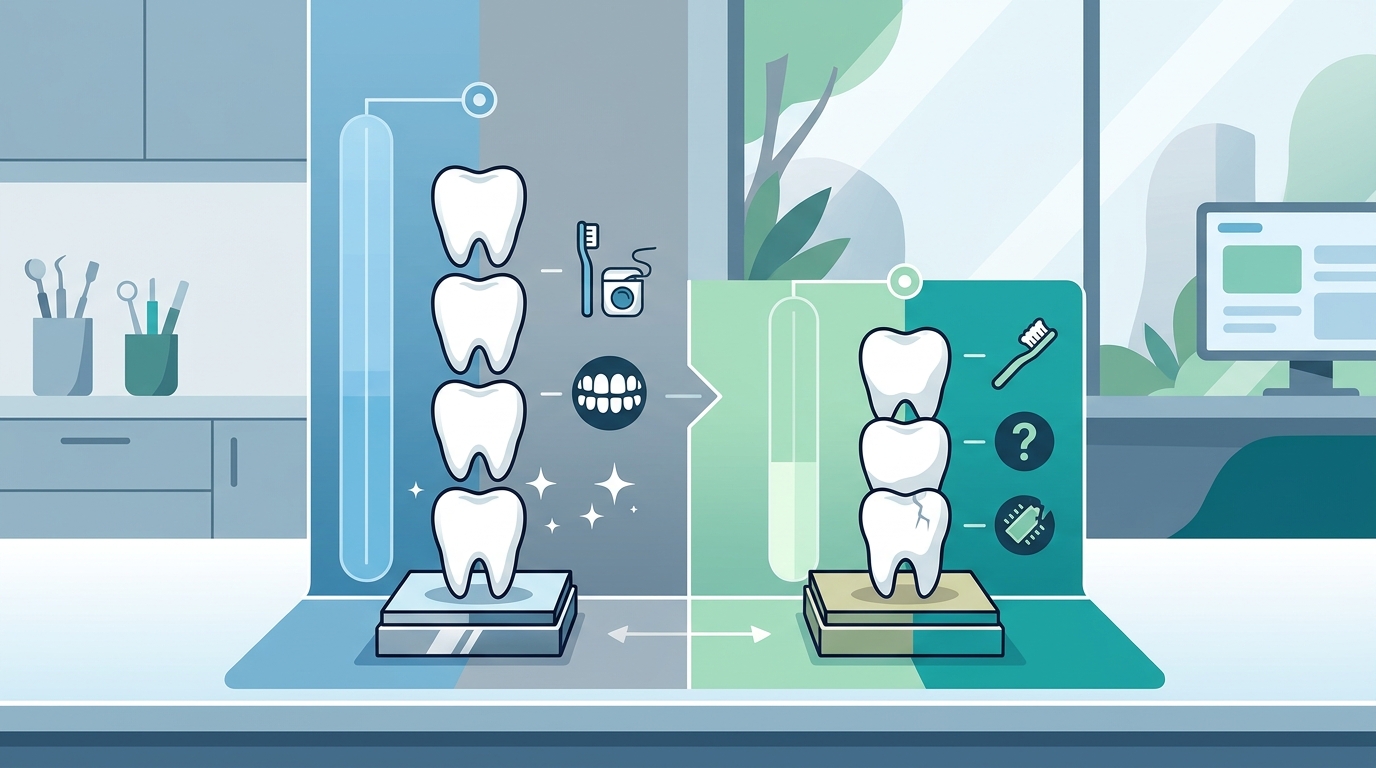
Porcelain is a harder, more rigid material that mimics the natural translucency of enamel. It is less prone to absorbing pigments from coffee, tea, or red wine. Composite resin, while effective for minor repairs, is softer and more porous. This makes it more susceptible to staining and chipping over time. Understanding these material properties helps set realistic expectations for how long your smile enhancement will last.
Average Lifespan and Clinical Evidence
Clinical studies indicate that porcelain veneers have a high survival rate over extended periods. One study of 84 people with porcelain veneers found they lasted as long as 20 years, according to ScienceInsights. Reliable data beyond that point is still being gathered, but the 10 to 20 year range is a standard benchmark for patients.
Composite bonding generally has a shorter functional lifespan, often ranging from 5 to 10 years. The adhesion complex between porcelain, luting composite, and enamel is considered a great advantage of porcelain veneers, with reported bonding strength around 63 MPa, as noted in PMC research. This strong bond contributes to the low failure rate of porcelain restorations. Composite bonds, while strong, may degrade faster due to the material's interaction with saliva and food acids.
Maintenance and Lifestyle Impact
Your daily habits significantly influence the longevity of both porcelain veneers and composite bonding. Hard foods like ice, nuts, or hard candy can chip both materials, but composite is more vulnerable. Teeth grinding, or bruxism, places excessive force on restorations. Patients with this habit may need a night guard to protect their investment.
Oral hygiene is critical for both types of restorations. Plaque buildup around the edges of a restoration can lead to decay in the underlying tooth. Regular professional cleanings at LI Dental Group help ensure that the margins of your veneers or bonding remain sealed and healthy. We emphasize routine checkups to monitor the integrity of your restorations before small issues become major problems.
Repair and Replacement Considerations
When a restoration fails, the repair options differ between the two materials. Composite bonding can often be repaired or polished if it chips or stains. This makes it a more flexible option for minor damage. Porcelain veneers, however, are more difficult to repair. If a porcelain veneer chips or cracks, it usually requires complete replacement.
Replacement costs and time are factors to consider. Composite bonding is generally less expensive and can be completed in a single visit. Porcelain veneers require a lab fabrication process, which takes longer but offers a more durable long-term solution. At LI Dental Group, we discuss these trade-offs during your consultation to help you make an informed decision.
Patient Experience and Aesthetics
Both porcelain veneers and composite bonding offer excellent aesthetic results. Porcelain is often preferred for its superior light reflection and natural appearance. It can be customized to match the exact shade and translucency of your natural teeth. Composite bonding provides a natural look as well, though it may not reflect light quite as effectively as porcelain.
Patients at LI Dental Group often choose porcelain for front teeth due to its durability and stain resistance. For those with minor chips or gaps, composite bonding is a popular, cost-effective choice. Our team in Garden City uses advanced technology to ensure precise fit and natural aesthetics for both options. We focus on creating smiles that not only look good but also function well for years to come.
Key Takeaways
- Porcelain veneers typically last 10 to 20 years, offering superior durability.
- Composite bonding usually lasts 5 to 10 years and is more prone to staining.
- Porcelain is harder and more resistant to wear than composite resin.
- Composite bonding can often be repaired, while porcelain usually requires replacement.
- Teeth grinding and hard foods can shorten the lifespan of both materials.
- Regular dental cleanings and checkups are essential for maintaining restorations.
- Porcelain offers better light reflection and a more natural aesthetic.
Frequently Asked Questions
How long do porcelain veneers last on front teeth?
Porcelain veneers on front teeth typically last between 10 and 20 years. With proper care and maintenance, they can last even longer. The exact lifespan depends on factors like oral hygiene and bite forces.
How long does composite bonding last?
Composite bonding generally lasts between 5 and 10 years. It is a durable option for minor repairs but may require more frequent maintenance or replacement than porcelain.
Can I repair a chipped porcelain veneer?
Repairing a chipped porcelain veneer is difficult. In most cases, if a porcelain veneer chips or cracks, it needs to be replaced entirely. Composite bonding, on the other hand, can often be repaired.
Does teeth grinding affect veneers and bonding?
Yes, teeth grinding can significantly shorten the lifespan of both porcelain veneers and composite bonding. A custom night guard can help protect your restorations from excessive wear.
Which material is more stain-resistant?
Porcelain is more stain-resistant than composite bonding. Porcelain does not absorb pigments from food or drink as easily, making it a better choice for those who consume coffee, tea, or red wine frequently.
How often should I visit the dentist with veneers?
You should continue to visit the dentist for routine cleanings and exams every six months. Regular checkups allow your dentist to monitor the condition of your restorations and address any issues early.
Conclusion
Choosing between porcelain veneers and composite bonding depends on your specific dental needs, budget, and lifestyle. Porcelain offers superior longevity and stain resistance, while composite bonding provides a cost-effective solution for minor repairs. At LI Dental Group, we provide personalized care to help you achieve a healthy, beautiful smile. To discuss your options, to schedule a consultation.