

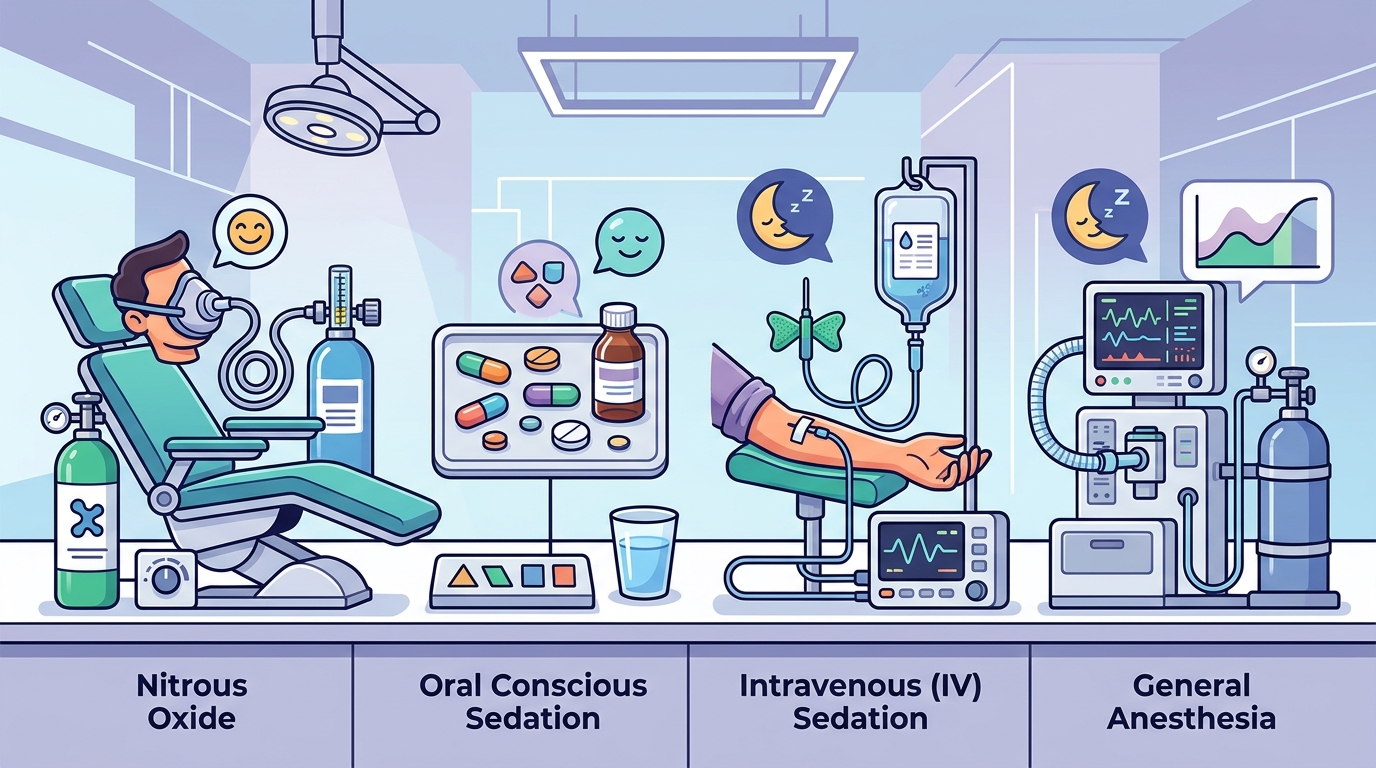
Dental sedation is a technique used to help patients relax and reduce anxiety during dental procedures. The most common types include nitrous oxide, oral conscious sedation, intravenous (IV) sedation, and general anesthesia. Each method offers a different level of relaxation, ranging from mild calmness to complete unconsciousness. At LI Dental Group in Garden City, NY, we tailor these options to ensure your comfort and safety during treatment. according to Current methods of
Nitrous Oxide: The Gentlest Approach
Nitrous oxide, often called laughing gas, is the mildest form of dental sedation. It is inhaled through a small mask placed over your nose. This method is ideal for patients with mild anxiety or those who simply want to feel more relaxed during routine cleanings or fillings. The effects are quick to onset and wear off rapidly once the oxygen flow is restored.
One of the primary benefits of nitrous oxide is that you remain fully conscious and aware of your surroundings. You can still respond to your dentist's instructions, which is helpful for procedures requiring your cooperation. Because the effects dissipate quickly, you can usually drive yourself home after the appointment. This makes it a convenient option for busy professionals and families in the Garden City area.
At LI Dental Group, we use nitrous oxide to help patients feel at ease without the lingering grogginess associated with heavier sedatives. It is a safe and effective way to manage dental fear for many of our patients.
Oral Conscious Sedation: Taking a Pill
Oral conscious sedation involves taking a prescription medication, typically a benzodiazepine, before your dental appointment. This method is suitable for patients with moderate anxiety who need a deeper level of relaxation than nitrous oxide provides. The medication is usually taken about an hour before your scheduled time to allow it to take effect.
With oral sedation, you remain awake and responsive but feel very relaxed and calm. You may feel drowsy, and your memory of the procedure might be hazy. Because the medication stays in your system for several hours, you must arrange for a responsible adult to drive you home. This option is often used for longer or more complex procedures where a higher level of comfort is desired.
Our team at LI Dental Group carefully evaluates your medical history and anxiety level to determine if oral sedation is the right fit for you. We provide clear instructions on how to take the medication and what to expect during your visit.
IV Sedation: Deep Relaxation
Intravenous (IV) sedation, also known as twilight sedation, delivers medication directly into your bloodstream through a vein in your arm or hand. This method allows for precise control over the level of sedation, making it ideal for patients with severe dental anxiety or those undergoing lengthy surgical procedures. You will be in a state of deep relaxation, drifting in and out of sleep, with little to no memory of the treatment.
IV sedation is administered and monitored by a board-certified anesthesiologist to ensure your safety and comfort. The rapid onset and ability to adjust the dosage in real-time make it a highly effective option for complex cases. Since you will be heavily sedated, you must have a designated driver to take you home after the procedure. This level of care is particularly beneficial for patients who have had negative experiences in the past or have a strong fear of the dental chair.
At LI Dental Group, we work with experienced anesthesiologists to provide IV sedation in a safe, office-based setting. This eliminates the need for a hospital operating room while maintaining the highest standards of patient safety.
General Anesthesia: Complete Unconsciousness
General anesthesia is the deepest level of sedation, rendering you completely unconscious and unaware of the procedure. It is typically reserved for extensive oral surgery, such as full-mouth reconstruction or the placement of multiple dental implants. This method is usually performed in a hospital or surgical center setting due to the need for advanced monitoring and airway management.
While general anesthesia is the most intensive option, it is rarely needed for routine dental work. It is a critical tool for patients with severe medical conditions or those who cannot tolerate any level of consciousness during treatment. The recovery period is longer, and you will require significant assistance upon waking. Our team will discuss this option only when it is medically necessary and appropriate for your specific case.
Choosing the Right Sedation for You
Selecting the appropriate sedation method depends on several factors, including the type of procedure, your level of anxiety, and your overall health. A simple cleaning may only require nitrous oxide, while a full-mouth implant restoration might benefit from IV sedation. Your dentist will conduct a thorough evaluation to recommend the safest and most effective option for your needs.
Communication is key to a successful sedation experience. Be honest with your provider about your fears, medical history, and any medications you are currently taking. This information helps them tailor the sedation plan to ensure your comfort and safety. At LI Dental Group, we prioritize patient education and comfort, ensuring you understand what to expect before, during, and after your procedure.
Key Takeaways
- Nitrous oxide is the mildest sedation option, ideal for mild anxiety and routine procedures.
- Oral conscious sedation involves taking a pill before your appointment for moderate relaxation.
- IV sedation provides deep relaxation and is administered by an anesthesiologist for complex cases.
- General anesthesia is the deepest level of sedation, used for extensive surgery in a hospital setting.
- You must arrange for a ride home if you receive oral or IV sedation.
- LI Dental Group in Garden City offers personalized sedation plans for patient comfort.
- Discuss your anxiety levels and medical history with your dentist to choose the right option.
Frequently Asked Questions
Is dental sedation safe?
Yes, dental sedation is safe when administered by trained professionals. At LI Dental Group, we follow strict safety protocols and monitor your vital signs throughout the procedure to ensure your well-being.
Will I remember the procedure if I am sedated?
With nitrous oxide, you will likely remember the procedure. With oral or IV sedation, your memory may be hazy or nonexistent. General anesthesia results in no memory of the treatment.
Can I drive myself home after sedation?
You can drive home after nitrous oxide because the effects wear off quickly. However, you must have a designated driver if you receive oral or IV sedation, as the medication remains in your system for several hours.
Does sedation affect the quality of dental work?
No, sedation does not affect the quality of the dental work. Your dentist remains focused on providing high-quality care while you remain comfortable and relaxed.
How long does it take to recover from IV sedation?
Recovery from IV sedation typically takes a few hours. You may feel groggy or tired for the rest of the day. It is important to rest and avoid strenuous activities for 24 hours after the procedure.
Who is a good candidate for sedation dentistry?
Patients with dental anxiety, a strong gag reflex, or those undergoing lengthy procedures are good candidates for sedation. Your dentist will evaluate your specific needs to determine the best option for you.
Conclusion
Understanding the different types of dental sedation can help you feel more confident and comfortable during your dental visits. Whether you need mild relaxation with nitrous oxide or deep sedation with IV medication, there is an option to suit your needs. At LI Dental Group in Garden City, NY, we are committed to providing gentle, personalized care that addresses your anxiety and ensures a positive dental experience. To discuss your sedation options and schedule an appointment, today.