

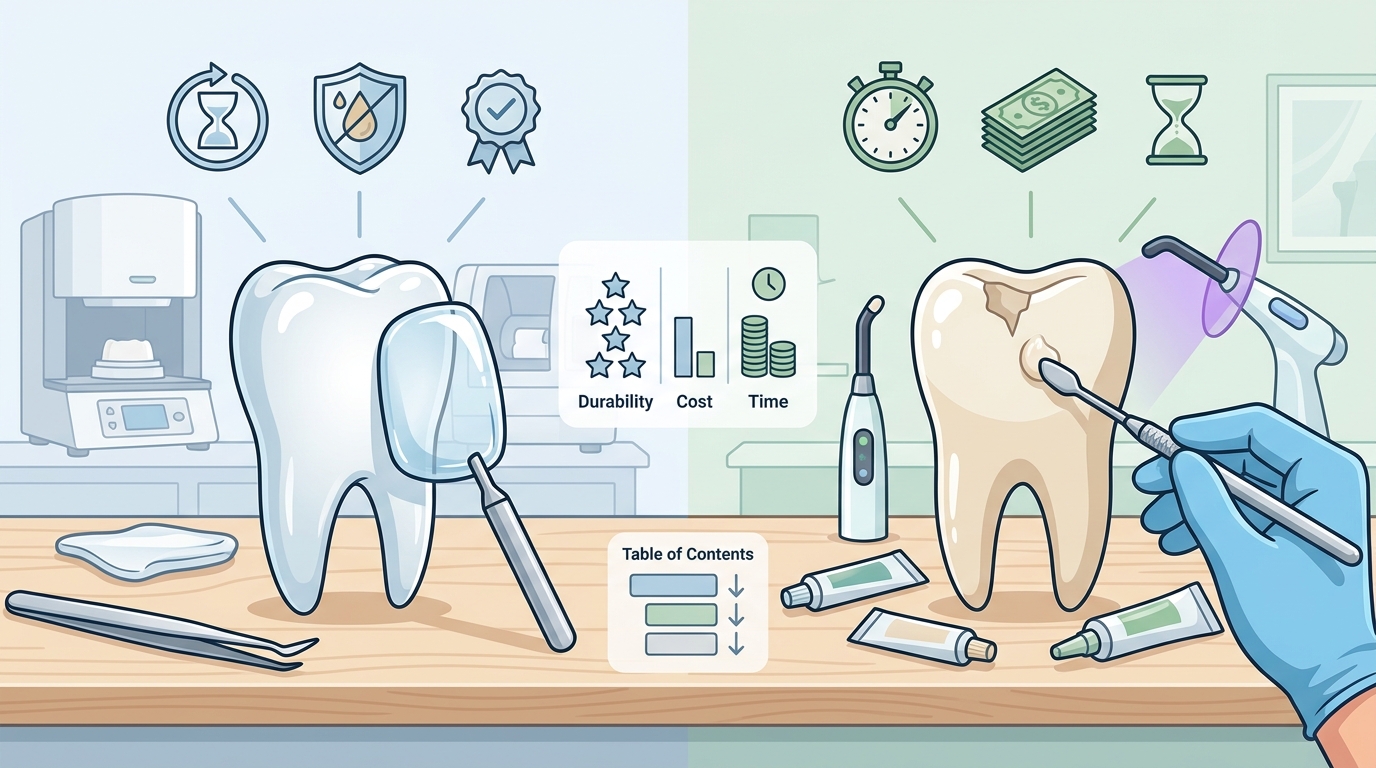
For a chipped front tooth, porcelain veneers are generally better for long-term durability and stain resistance, while composite bonding is better for immediate, low-cost repairs. This guide compares both options at LI Dental Group in Garden City, NY, covering durability, cost, and clinical factors to help you choose the right treatment for your smile.
Durability and Longevity
When selecting a restoration for a chipped front tooth, understanding the lifespan of each material is critical. Porcelain veneers are ultra-thin shells bonded to the front of the tooth, offering superior resistance to staining and wear. Composite bonding is a tooth-colored resin material applied directly to the tooth surface to repair minor damage. The choice between these two depends heavily on the size of the chip and your lifestyle habits.
Lifespan Expectations
Porcelain veneers typically last between 10 and 15 years, and often longer with proper care. The material is highly durable and mimics the light-reflecting properties of natural enamel. Composite bonding, on the other hand, generally lasts between 5 and 10 years. While composite is strong, it is more susceptible to chipping and staining over time compared to porcelain. At LI Dental Group, we evaluate the extent of the damage to determine which material will provide the most stable long-term result.
Resistance to Staining and Wear
Porcelain is a non-porous material, meaning it does not absorb pigments from coffee, tea, or red wine. This makes it an excellent choice for patients who want a long-lasting white smile. Composite resin is more porous and can absorb stains over time, requiring more frequent professional cleaning or touch-ups. Additionally, porcelain is harder and more resistant to the daily wear and tear of chewing, whereas composite may wear down faster if the patient grinds their teeth.
Impact of Oral Habits
Your daily habits significantly influence the longevity of your restoration. Patients who grind their teeth (bruxism) may experience faster wear on composite bonding. In such cases, a custom nightguard is often recommended to protect the investment. Porcelain is more resilient to these forces, but extreme grinding can still cause fractures. Our team in Garden City assesses your bite and habits during the consultation to ensure the chosen material will last as long as possible.
Cost Comparison
Cost is a major factor for many patients when deciding between porcelain veneers and composite bonding. Generally, composite bonding is the more affordable option, while porcelain veneers represent a higher investment. Understanding the price differences and insurance coverage can help you make an informed decision.
Price Ranges in Garden City
At LI Dental Group, the cost of dental treatments varies based on the complexity of the case. The following table summarizes the average costs for these procedures in our practice.
| Treatment Type | Average Cost Per Tooth | Typical Lifespan | Insurance Coverage |
|---|---|---|---|
| Composite Bonding | $250 - $600 | 5 - 10 years | Often partially covered |
| Porcelain Veneers | $900 - $2,500 | 10 - 15+ years | Rarely covered (cosmetic) |
Value Over Time
While composite bonding has a lower upfront cost, it may require more frequent repairs or replacements. If a composite filling chips or stains, it can often be repaired in a single visit. Porcelain veneers, though more expensive initially, tend to last longer and require fewer interventions. When calculating the cost per year of use, porcelain may offer better long-term value for patients who want a durable, low-maintenance solution.
Financing Options
For patients who prefer the durability of porcelain but are concerned about the upfront cost, LI Dental Group offers flexible financing options. We accept most major PPO dental insurance plans and can help you understand your specific benefits. Our team will provide a clear, itemized estimate before beginning any procedure, so you know exactly what to expect.
Key Takeaways
- Porcelain veneers are more durable and stain-resistant than composite bonding.
- Composite bonding is a more affordable option for minor chips and immediate repairs.
- Porcelain veneers typically last 10 to 15 years, while composite bonding lasts 5 to 10 years.
- Composite bonding is more susceptible to staining from coffee, tea, and wine.
- Insurance may cover composite bonding as a restorative procedure but rarely covers porcelain veneers.
- Teeth grinding can shorten the lifespan of both materials, but composite is more vulnerable.
- Porcelain veneers require minimal tooth preparation, preserving more natural tooth structure.
- Consultation with a dentist is essential to determine the best option for your specific case.
Frequently Asked Questions
Can I eat normally after getting composite bonding?
Yes, you can eat normally after composite bonding, but you should avoid biting into very hard foods like ice or hard candy. These can cause the composite to chip or break. Porcelain veneers are stronger, but you should still avoid using your teeth as tools.
Does composite bonding stain easily?
Composite bonding is more porous than porcelain and can absorb stains from coffee, tea, and red wine over time. Regular professional cleanings and avoiding smoking can help maintain the color of your composite restoration.
How long does the procedure take?
Composite bonding is usually completed in a single visit, taking about 30 to 60 minutes per tooth. Porcelain veneers typically require two visits: one for preparation and impressions, and another for placement after the lab fabricates the veneers.
Is porcelain bonding reversible?
Porcelain veneers are not fully reversible because some enamel is usually removed during preparation. However, ultra-thin veneers may require minimal or no enamel removal, making them a more conservative option. Composite bonding is also not reversible once the material is bonded, but it can be removed and replaced if necessary.
Which option is better for a large chip?
For a large chip, porcelain veneers are often the better choice because they provide more strength and durability. Composite bonding may be sufficient for small chips or minor cosmetic adjustments, but it may not hold up well under heavy biting forces if the chip is extensive.
Do I need a nightguard if I grind my teeth?
If you grind your teeth, a custom nightguard is highly recommended to protect both composite bonding and porcelain veneers. Grinding can cause composite to wear down quickly and may even fracture porcelain veneers over time.
Can I whiten my teeth after getting composite bonding?
Composite bonding does not respond to teeth whitening treatments. If you plan to whiten your teeth in the future, it is best to do so before getting composite bonding. This ensures the new restoration matches your newly whitened smile. Porcelain veneers can be custom-shaded to match your desired level of whiteness.
How do I maintain my new restoration?
Maintain good oral hygiene by brushing twice a day and flossing daily. Avoid chewing on hard objects and schedule regular dental check-ups. At LI Dental Group, we provide personalized care instructions to help you keep your smile healthy and beautiful.
Conclusion
Choosing between porcelain veneers and composite bonding for a chipped front tooth depends on your priorities for durability, cost, and aesthetics. Porcelain veneers offer superior longevity and stain resistance, making them ideal for long-term solutions. Composite bonding provides a cost-effective, immediate repair for minor damage. At LI Dental Group in Garden City, NY, our experienced team will evaluate your specific case and help you choose the best option for your smile. to schedule a consultation and take the first step toward a confident, healthy smile.