

Getting dental implants is a multi-stage process that restores both the function and appearance of your smile. At LI Dental Group in Garden City, NY, our team guides you through each phase with precision and care. Understanding these steps helps you prepare for your treatment and set realistic expectations for your recovery.
1. Initial Consultation and Examination
The first step is a comprehensive evaluation of your oral health and bone density. Your dentist will review your medical history and take X-rays or 3D CBCT scans to assess your jawbone. This diagnostic phase determines if you are a suitable candidate for implants or if you need preliminary procedures like bone grafting.
2. Treatment Planning
A personalized roadmap is created based on your diagnostic results. The treatment plan outlines the number of implants needed, the type of restoration, and the estimated timeline. At LI Dental Group, we use advanced digital planning to ensure precise placement and optimal aesthetic outcomes. according to Trends in Dental
3. Implant Placement Surgery
The titanium implant post is surgically inserted into the jawbone. This procedure is typically performed under local anesthesia, with sedation options available for anxious patients. The implant acts as a new root, providing a stable foundation for the replacement tooth.
4. Osseointegration Healing Period
Your jawbone fuses with the implant over several months. This biological process, known as osseointegration, is critical for the long-term success of the implant. During this time, you may wear a temporary tooth to maintain your appearance while the bone heals around the post.
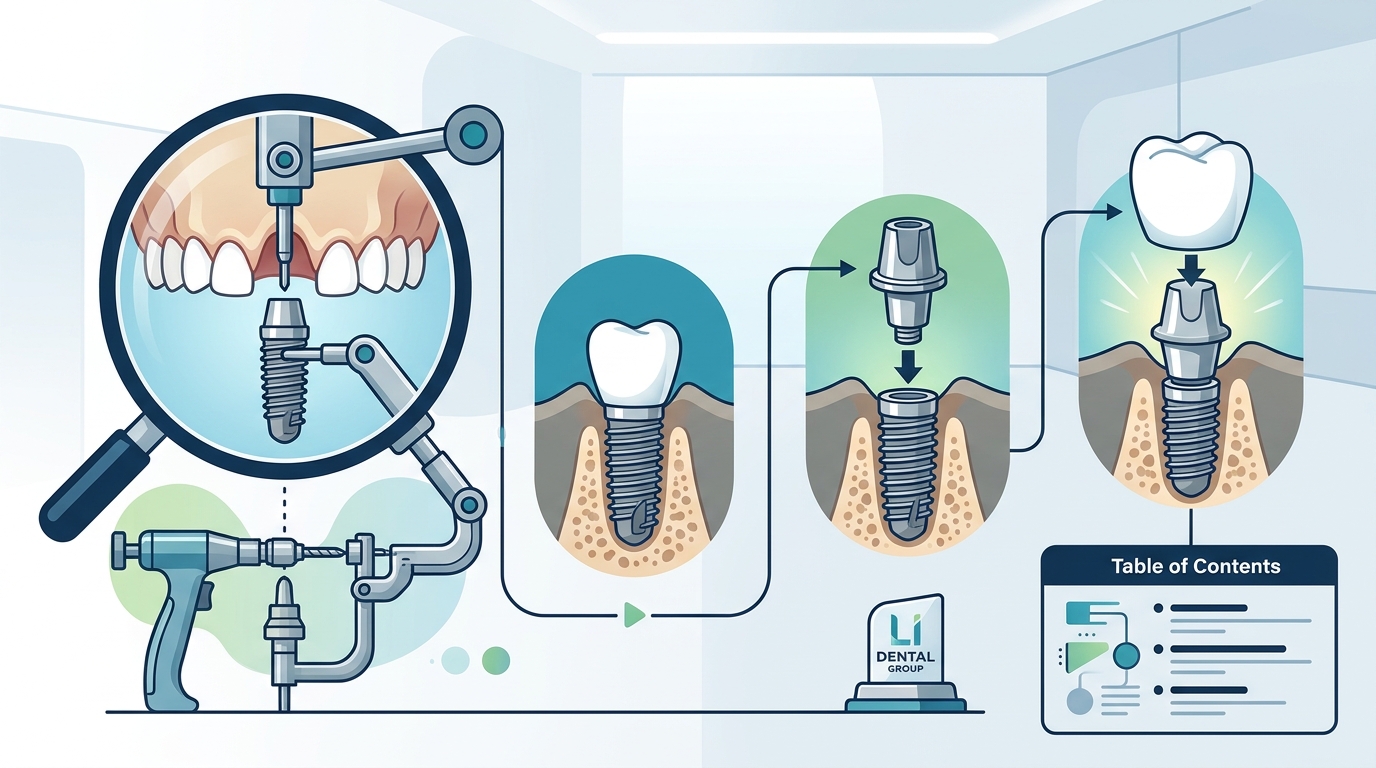
5. Abutment Attachment
A small connector piece is attached to the implant after healing. The abutment protrudes above the gumline and serves as the interface between the implant and the final crown. This step ensures the restoration is securely anchored and properly aligned with your bite.
6. Final Restoration Placement
The custom-made crown or bridge is cemented onto the abutment. This final restoration is crafted to match the color and shape of your natural teeth. Once placed, the implant functions like a real tooth, allowing you to chew, speak, and smile with confidence.
7. Long-Term Maintenance and Follow-Up
Regular check-ups and diligent home care ensure the longevity of your implants. Implants require the same brushing and flossing habits as natural teeth. Professional cleanings help prevent peri-implantitis, a condition that can compromise the supporting bone and gums.
Choosing the Right Approach for Your Needs
Selecting the right implant strategy depends on your specific dental situation and goals. Whether you are missing a single tooth or need a full-arch reconstruction, a thorough consultation is the best way to determine the optimal path forward. Your dentist will weigh factors such as bone quality, budget, and lifestyle to recommend the most suitable solution.
Frequently Asked Questions
How long does the entire dental implant process take?
The timeline varies based on individual healing rates and the complexity of the case. Typically, the process takes three to six months, with the majority of that time dedicated to the osseointegration phase. according to Evaluation of Survival
Is the implant surgery painful?
Most patients report minimal discomfort during the procedure due to local anesthesia. Sedation options are available to help you relax, and any post-operative soreness is usually manageable with over-the-counter pain medication.
Do I need a bone graft before getting implants?
A bone graft is only necessary if you have significant bone loss in the area where the implant will be placed. Your dentist will evaluate your bone density during the initial consultation to determine if this preliminary step is required.
How long do dental implants last?
With proper care and regular dental visits, dental implants can last a lifetime. The crown may need replacement after 10 to 15 years due to normal wear and tear, but the implant post itself is designed for long-term durability.
Can I eat normally after getting dental implants?
You will need to follow a soft food diet during the initial healing period. Once the final restoration is placed and the area has fully healed, you can return to your normal diet and chew with confidence.