
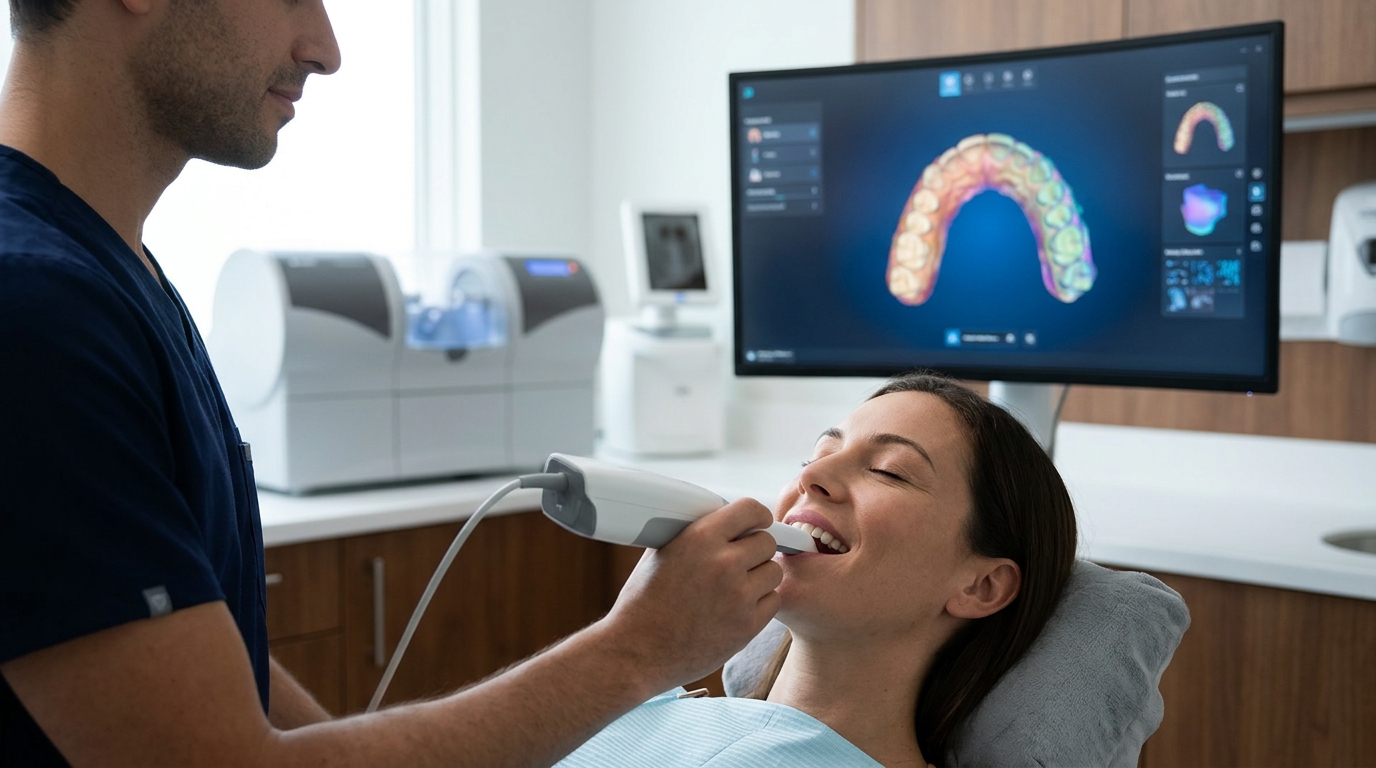
LI Dental Group in Garden City, NY, utilizes advanced 3D digital scanning, same-day restoration capabilities, and modern imaging to provide precise, comfortable, and efficient dental care. This guide explores how these specific technologies enhance patient outcomes, reduce treatment time, and improve diagnostic accuracy in a modern dental practice.
Dental Imaging Technology
Modern dental imaging is the foundation of accurate diagnosis and treatment planning. Traditional two-dimensional X-rays provide a flat view of the teeth and bone, which can sometimes obscure critical details. Advanced imaging technologies offer a three-dimensional perspective, allowing dentists to visualize the complex anatomy of the jaw, nerves, and sinus cavities with greater clarity.
The Role of 3D Imaging in Diagnosis
Three-dimensional imaging allows for a more comprehensive assessment of oral health. It helps identify issues that may not be visible on standard X-rays, such as impacted wisdom teeth, bone density changes, or the precise location of a nerve. This level of detail is crucial for planning complex procedures like dental implants or root canals. By understanding the exact spatial relationships within the mouth, dentists can minimize risks and improve the success rate of treatments.
Benefits for Patient Safety and Comfort
Advanced imaging also contributes to patient safety by reducing the need for exploratory procedures. When a dentist can see exactly what is happening inside the tooth or jaw, they can plan a more targeted and less invasive approach. This often translates to shorter appointment times and less discomfort for the patient. At LI Dental Group, the integration of modern imaging ensures that every treatment plan is based on the most accurate data available. according to Imaging Ohio State
Same-Day Restorations
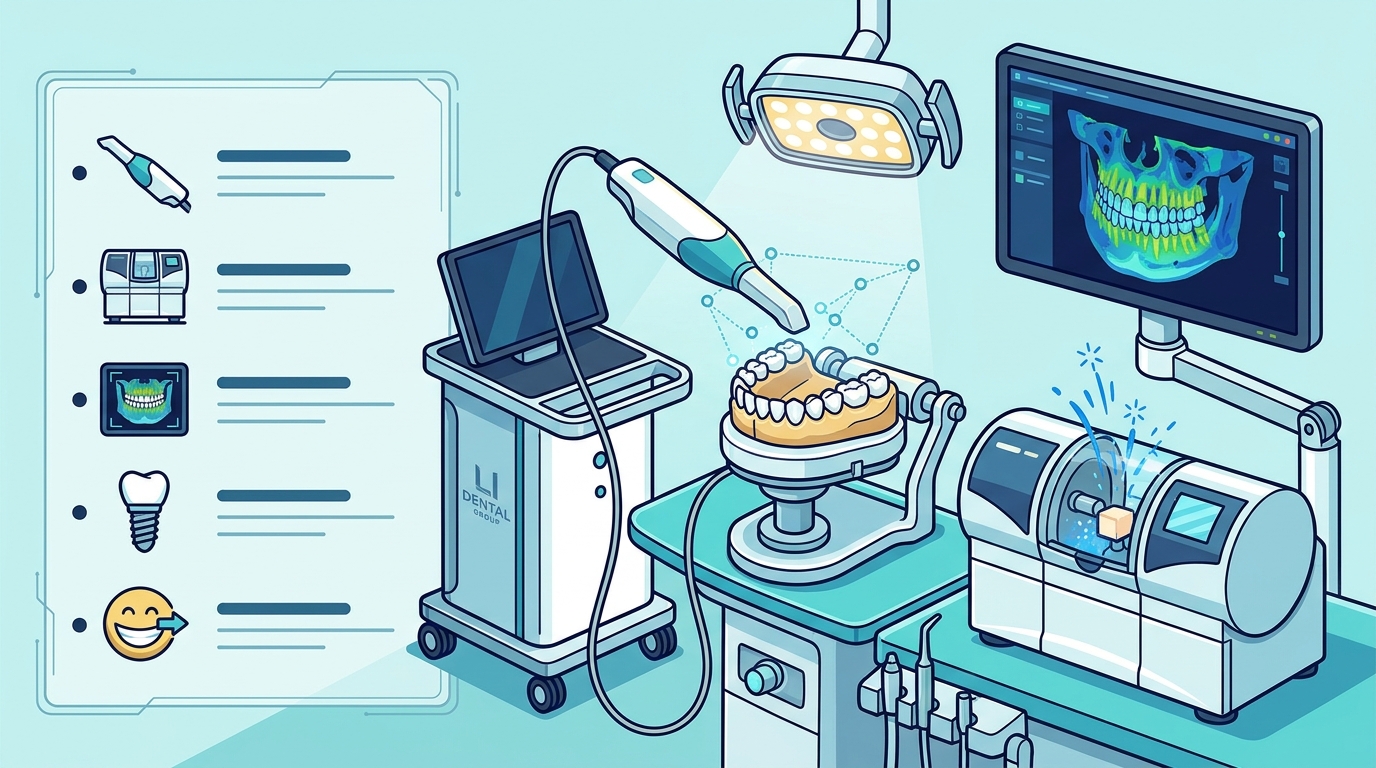
Same-day restorations have transformed the experience of getting a crown or filling. In the past, patients often had to visit the dentist twice: once to prepare the tooth and take impressions, and again weeks later to have the permanent restoration cemented. This required wearing a temporary crown, which could be uncomfortable and prone to falling out. Today, digital workflows allow for the design, milling, and placement of a permanent restoration in a single visit.
How Digital Milling Works
The process begins with a digital scan of the prepared tooth. This data is sent to a computer-aided design (CAD) software, where the dentist designs the crown to fit perfectly. The design is then sent to a computer-aided manufacturing (CAM) mill, which carves the crown from a solid block of ceramic material. This milling process is precise and can be completed in a matter of minutes. The result is a durable, natural-looking restoration that is ready to be cemented immediately.
Advantages of Single-Visit Treatment
Single-visit treatment offers several significant benefits. First, it saves time, as patients do not need to schedule a second appointment. Second, it eliminates the need for a temporary crown, reducing the risk of complications. Third, it provides immediate relief from pain or sensitivity associated with a damaged tooth. For busy professionals and families in Garden City, the convenience of same-day restorations is a major advantage. LI Dental Group leverages this technology to provide efficient and effective care for patients needing crowns or other restorations.
Intraoral Scanning
Intraoral scanning is a digital technology that replaces traditional rubber impressions. Instead of using trays and goopy materials that can be unpleasant and cause gagging, an intraoral scanner uses a small camera to capture a 3D image of the teeth and gums. This process is quick, comfortable, and highly accurate. The scanner moves around the mouth, capturing detailed images that are assembled into a digital model of the patient's dentition.
Comfort and Accuracy
One of the primary benefits of intraoral scanning is patient comfort. Many patients find traditional impressions to be one of the most unpleasant parts of a dental visit. Intraoral scanning eliminates this discomfort, making the experience more enjoyable. Additionally, digital scans are highly accurate, providing a precise record of the tooth's shape and size. This accuracy is essential for creating restorations that fit perfectly and function correctly.
Integration with Treatment Planning
Intraoral scans are not just used for making crowns. They are also valuable for treatment planning in orthodontics, implant dentistry, and prosthodontics. The digital model can be used to simulate treatment outcomes, allowing patients to see a preview of their new smile before treatment begins. This visual aid helps patients make informed decisions and sets realistic expectations. At LI Dental Group, intraoral scanning is a key component of the digital workflow, enhancing both the precision and the patient experience.
Comparison of Traditional and Digital Dental Technologies
| Feature | Traditional Method | Digital Method |
|---|---|---|
| Impressions | Rubber trays and putty | Intraoral 3D scanner |
| Comfort | Can cause gagging and discomfort | Non-invasive and comfortable |
| Accuracy | Prone to distortion | Highly precise digital data |
| Turnaround Time | Days to weeks for lab work | Minutes for milling and placement |
| Patient Visits | Multiple visits required | Often single visit |
Key Takeaways
- Advanced 3D imaging provides a detailed view of oral anatomy, improving diagnostic accuracy.
- Same-day restorations allow for crowns and fillings to be completed in a single visit.
- Intraoral scanning replaces uncomfortable traditional impressions with a digital alternative.
- Digital workflows reduce treatment time and increase patient comfort.
- Technology enables precise treatment planning and predictable outcomes.
- Modern dental practices integrate multiple digital tools for comprehensive care.
- Patients benefit from faster, more comfortable, and more accurate dental treatments.
Frequently Asked Questions
What is intraoral scanning?
Intraoral scanning is a digital technology that uses a small camera to capture a 3D image of the teeth and gums, replacing traditional rubber impressions.
How does same-day restoration work?
Same-day restoration involves digitally scanning a prepared tooth, designing a crown on a computer, and milling it from a ceramic block in the office, all in one visit.
Is 3D imaging painful?
No, 3D imaging is a non-invasive procedure that uses X-rays to create a detailed image of the teeth and jaw, causing no pain or discomfort.
Who can benefit from digital dentistry?
Patients needing crowns, fillings, implants, or orthodontic treatment can benefit from digital dentistry due to its precision and comfort.
Does LI Dental Group use digital technology?
Yes, LI Dental Group utilizes 3D digital scanning and modern imaging to provide precise and efficient dental care in Garden City, NY.
How accurate are digital scans?
Digital scans are highly accurate, providing a precise record of the tooth's shape and size, which is essential for creating well-fitting restorations.
Conclusion
State-of-the-art technology is transforming dental care in Garden City, NY. By integrating advanced imaging, same-day restorations, and intraoral scanning, practices like LI Dental Group offer patients a more comfortable, efficient, and precise experience. These technologies not only improve treatment outcomes but also enhance the overall patient experience. If you are looking for a dental practice that leverages modern technology to provide exceptional care, consider scheduling a consultation with LI Dental Group to learn more about how digital dentistry can benefit your smile.